FROM THOMASIAN ROOTS TO COFFEE FOR PEACE: COMPASSION, COMPETENCE, AND COMMITMENT

There are moments when coming home is more than returning to a familiar place. It becomes an opportunity to look back, recognize the seeds that were planted long ago, and see how those seeds have grown into something larger than ourselves. Recently, I had the privilege of returning to my college alma mater, the University of Santo Tomas (UST), for two meaningful occasions: the launch of the second issue of Sixteeneleven and the blessing of Tiger’s Coffee Corner. The occasion became deeply personal because my journey with Coffee for Peace was featured in the publication as part of my recognition as a Most Outstanding Alumna. UST’s Office for Alumni Relations describes Sixteeneleven’s second issue as a celebration of Thomasian identity, highlighting alumni stories, excellence, service, and the values that continue to shape the Thomasian community. For me, however, the experience was not simply about an alumni recognition. It was about remembering where I came from—and asking what I am still called to become.
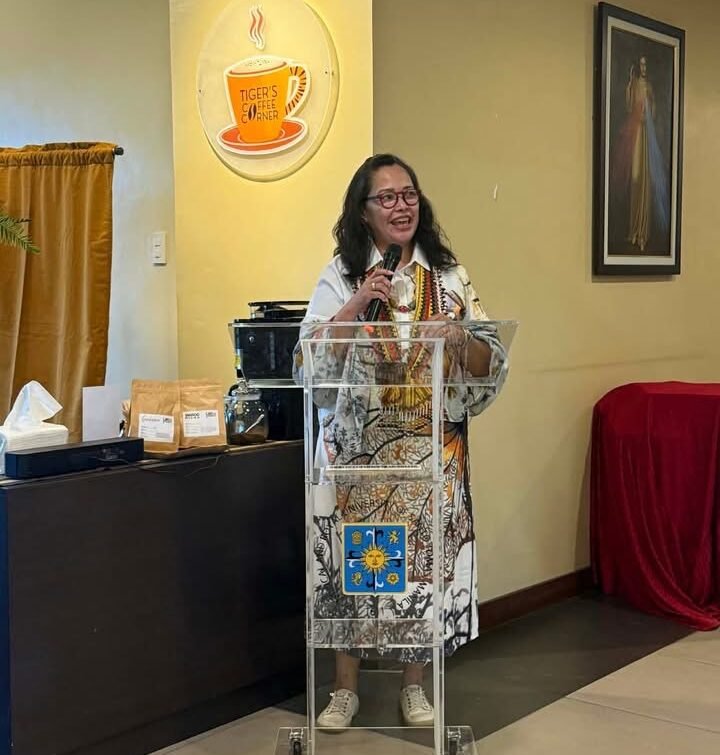
COMING HOME WITH A STORY
When I was a student at UST, I could not have imagined that my life would eventually lead me into the world of coffee, peacebuilding, Indigenous communities, social entrepreneurship, and inclusive development.
Today, Coffee for Peace works with farming communities, including Indigenous and conflict-affected communities, using coffee as a pathway toward livelihood, dignity, reconciliation, and peace. The organization describes its work as building peace through coffee and has worked with thousands of farmers.
But the journey did not begin with coffee.
It began with a desire to respond to human suffering.
Over the years, I have learned that poverty is not simply the absence of money. Sometimes it is the absence of opportunity. Sometimes it is the absence of dignity. Sometimes it is the consequence of historical injustice, conflict, exclusion, or systems that have prevented people from becoming what they are capable of becoming.
That is why our work cannot stop at charity.
We need transformation.
Coffee became one of the ways through which I could participate in that transformation.
COFFEE IS MORE THAN A PRODUCT
I have often said that coffee is not merely a commodity. Behind every cup is a farmer. Behind the farmer is a family. Behind the family is a community. And behind the community is a history—sometimes a history of poverty, conflict, displacement, discrimination, or exclusion.
When we work with coffee farmers, therefore, we are not simply improving beans. We are trying to improve relationships. We are trying to create economic opportunities that respect human dignity. We are trying to build bridges where there have been walls.
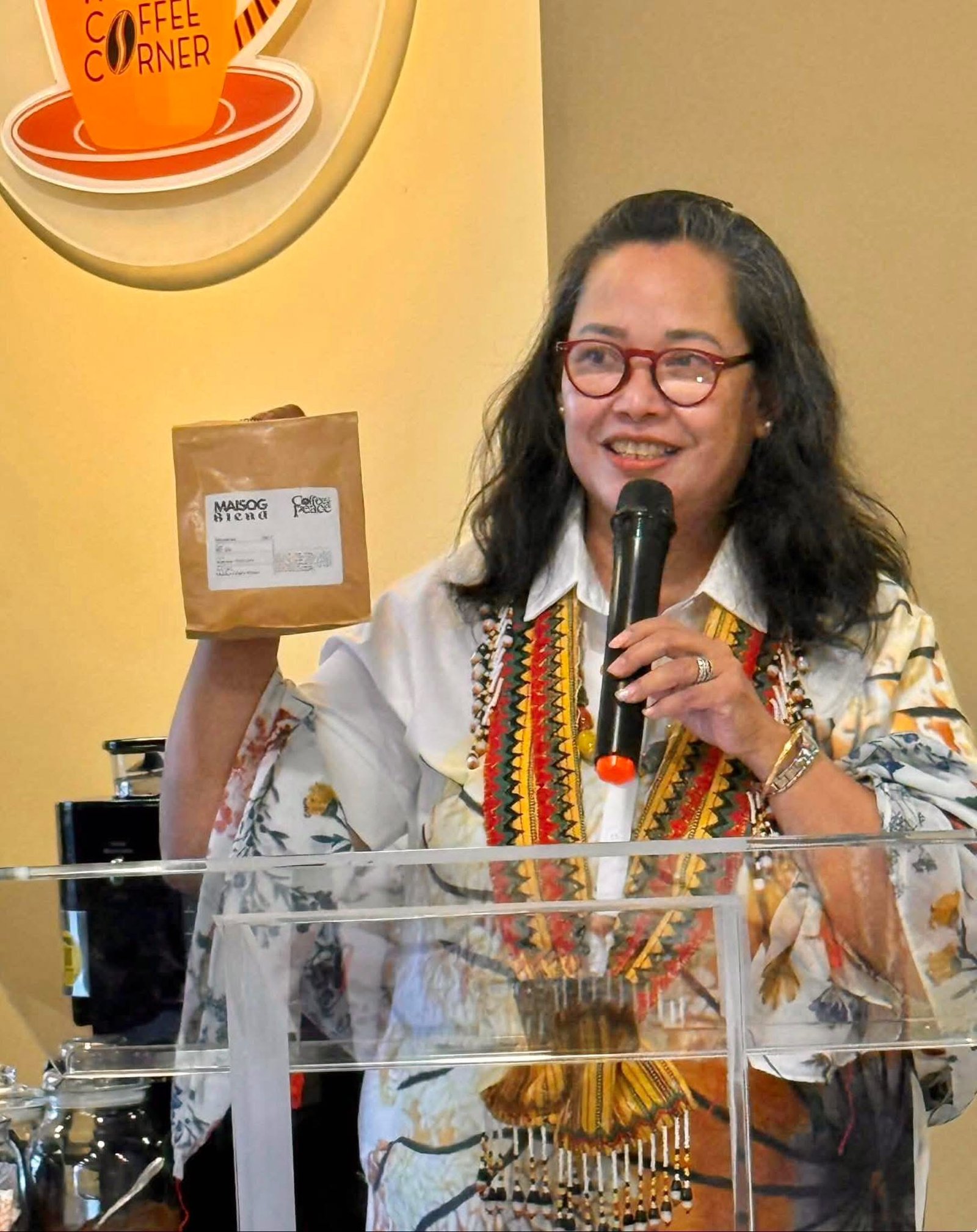
This is why I continue to believe that social entrepreneurship can become a powerful instrument for peacebuilding. My work with Coffee for Peace has taught me that enterprise can become a space where people who were once divided can meet around a shared economic purpose.
Coffee becomes a language. A cup becomes a conversation. And a conversation can become the beginning of reconciliation.
COMPASSION — OUR COMPASS
At the launch, I found myself returning to three words that have increasingly become important to me: Compassion. Competence. Commitment.
The first is compassion. Compassion reminds me that development must begin with people. It asks me to see the person behind the problem. When I encounter a farmer who is struggling, I do not want to see merely a producer who needs training. I want to see a human being with dreams, knowledge, family, culture, dignity, and potential.
This is why I often describe our approach not as simply helping communities but companioning them.
There is an important difference.

Helping can sometimes mean doing something for people. Companioning means walking with people. It means listening. It means learning. It means sharing risks. It means staying long enough for relationships to mature.
I mean holistic prosperity. Prosperity that includes dignity. Food security. Education. Healthy families. Peaceful communities. A healthy environment. And the capacity of people to determine their own future.
This is why I am deeply interested in social entrepreneurship.
The goal is not simply to create businesses that make money.
The goal is to create enterprises that create value for people and communities while remaining economically sustainable.
A farmer should not remain permanently dependent on assistance. A farmer can become an entrepreneur. A producer can become a decision-maker. A community can become an economic actor.
And people who have historically been treated as beneficiaries can become partners and co-creators of their own development.
That is the transition I want to see.
COMPETENCE — STRIVING FOR EXCELLENCE
But compassion alone is not enough.
We also need competence.
Good intentions cannot substitute for quality. If we want to create sustainable enterprises, we must pursue excellence in everything we do. The farmer must learn better agricultural practices. The processor must understand quality. The barista must respect the craft. The entrepreneur must understand markets. The organization must practice good governance. The social enterprise must remain financially responsible.
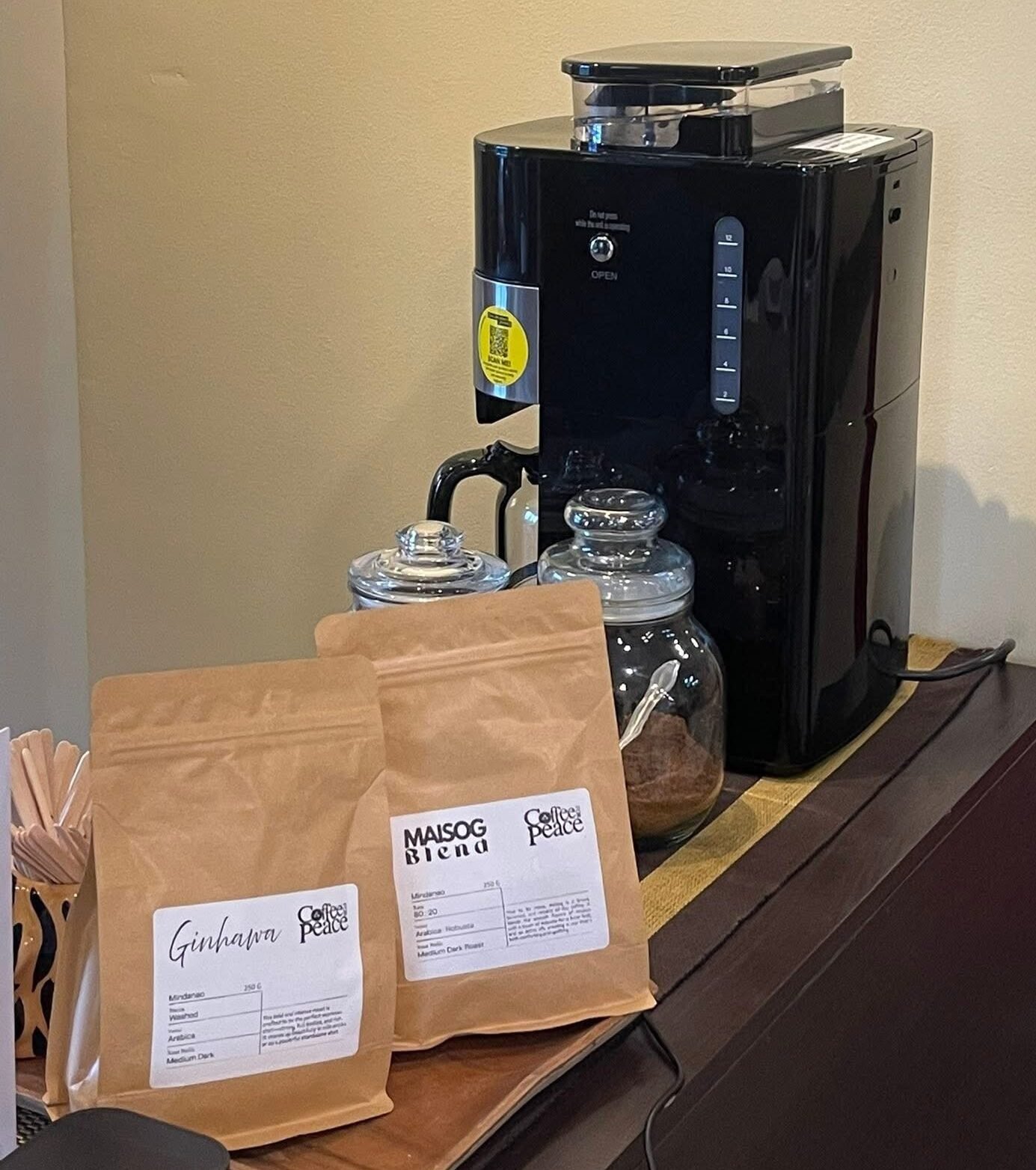
And all of us must continue learning.
I have learned that pursuing justice does not give us permission to compromise on quality.
Quite the opposite.
Justice requires excellence.
When we ask consumers to support farmers, we should also give them a product that deserves their trust. When we claim that our coffee is special, we must work hard to make it truly special. When we build an enterprise for communities, we must build an enterprise that can endure.
That is why I say: Quality over everything.
Not because quality is more important than people—but because excellence is one way of honoring people.
COMMITMENT — WALKING WITH THE COMMUNITY
And then there is commitment.
This may be the hardest of the three.
Compassion can inspire us.
Competence can equip us.
But commitment asks: Will you stay?
Transformation takes time. Farmers do not become entrepreneurs overnight. Communities do not heal from conflict overnight. Trust is not built through one workshop. Peace is not produced by one project.

Sustainable development is not achieved through one funding cycle. It requires presence. It requires patience. It requires relationships. It requires walking with people through both success and failure.
This is why I have come to appreciate the word companioning.
To companion someone is to walk beside them without pretending that we know everything about their journey.
It is to say: I will listen. I will learn. I will walk with you. Let us discover together what is possible.
A FULL-CIRCLE MOMENT
Standing inside my alma mater and seeing the Coffee for Peace story represented in Sixteeneleven felt like a full-circle moment.
I returned to the place where part of my intellectual and personal formation began.
But I did not return as the same person who once walked those university corridors. I returned carrying stories from farmers. Stories from Indigenous communities. Stories from women entrepreneurs. Stories from peacebuilders. Stories from failures. Stories from small victories. And stories from many people who taught me that transformation is possible when we choose to walk together.
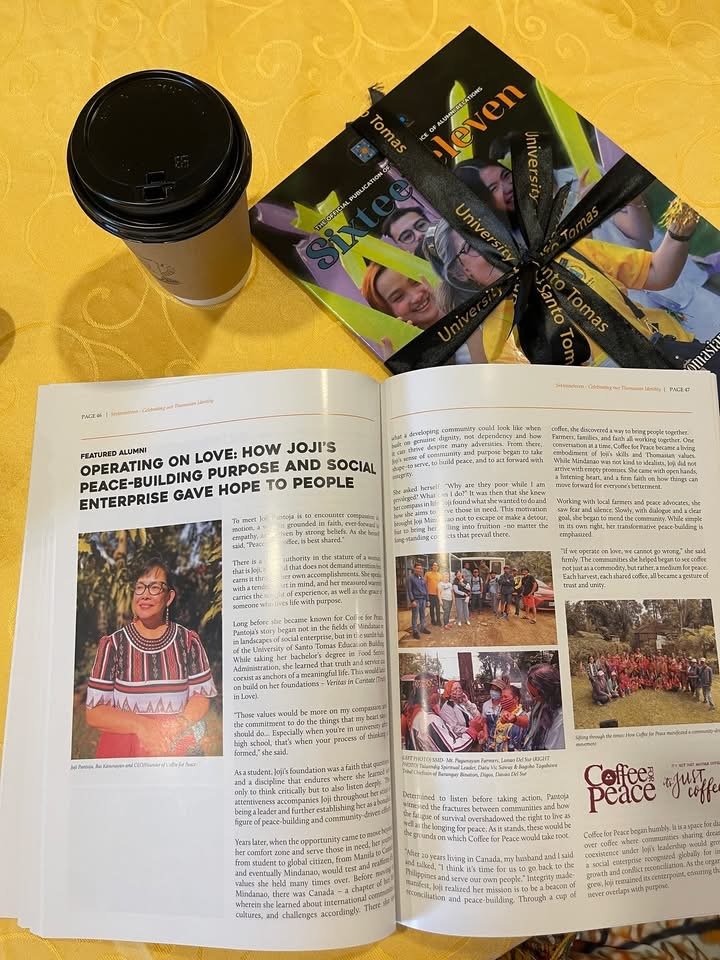
The recognition may carry my name, but the story does not belong to me alone. It belongs to the farmers who planted the trees. To the communities who took risks. To our staff and partners who persevered. To the mentors and institutions that opened doors. To the consumers who chose to believe that their cup of coffee could carry a deeper story.
And ultimately, I believe, it belongs to the Creator who continually surprises us with possibilities we could not have imagined.
LET THIS BE OUR FIRE
As I looked around during the launch of Sixteeneleven and the blessing of Tiger’s Coffee Corner, I felt grateful for my Thomasian roots.
But more than gratitude, I felt challenged. What does it mean to carry the Thomasian identity into the world?
For me, it cannot simply mean excellence for personal achievement. It must mean excellence in service of others. It must mean using knowledge to solve real problems. Using enterprise to create dignity. Using relationships to build peace. Using leadership to open doors for others. And using whatever gifts we have received to help create a more just and compassionate society.
So I return to these three words:
COMPASSION — our compass. See the person. Listen to the community. Let human dignity guide the enterprise.
COMPETENCE — our discipline. Keep learning. Keep improving. Pursue excellence. Never use good intentions as an excuse for poor quality.
COMMITMENT — our way. Stay. Walk with people. Companion them.
Build relationships strong enough to survive difficulties and long enough to witness transformation.
Perhaps this is what coming home has taught me. Our alma mater gives us roots. Life gives us experiences. Communities give us wisdom. And our calling gives those experiences direction.
Now, as I hold another cup of coffee, I find myself thinking about the journey ahead.
There are still many communities to walk with. Many farmers to accompany. Many young entrepreneurs to mentor. Many bridges to build. Many injustices to transform. Many cups of coffee to brew.
Let this be our fire.
Let this be our way.
And may every cup we share become a small reminder that compassion, competence, and commitment can help turn poverty into prosperity, exclusion into belonging, and suppliers into entrepreneurs—while turning coffee into a bridge for peace.